

South Africa’s professional landscape has undergone a permanent transformation into a sophisticated global talent hub. By 2026, South African professionals are no longer tethered to the local economy. They participate in a borderless digital labour market where companies hire talent regardless of geography.
This model works particularly well for South Africa. The country offers strong English proficiency and favorable time-zone alignment with the United Kingdom and European Union. South African workers typically operate within a 0–2 hour difference from major European cities, which allows real-time collaboration during the workday.
Economic pressure also drives the growth of remote work. According to the Q4 2025 Quarterly Labour Force Survey, the official unemployment rate stands at 31.4%, while the expanded definition exceeds 42%. These figures represent millions of people actively seeking employment opportunities.
Remote work creates an alternative pathway for skilled professionals. Workers in Durban, Johannesburg, Cape Town, and smaller towns can now work for international companies without relocating. This opportunity has turned South Africa into a growing source of remote professionals for global companies.
For job seekers, the opportunity is real. The challenge is identifying legitimate platforms, understanding which skills employers demand, and building a profile that international recruiters trust.

Why Remote Work Matters in South Africa
Remote roles address structural challenges in South Africa’s labour market. Geography, transport costs, and uneven access to employment often limit opportunities for professionals in many regions.
Commuting is a clear example. In major metropolitan areas, many employees spend two to three hours per day traveling to and from work. Remote work eliminates this cost while allowing professionals to remain productive from home.
International companies also benefit from hiring South African talent. Firms gain access to skilled professionals while reducing labour costs by 30–50% compared with hiring locally in the US or Western Europe. This cost advantage does not necessarily mean lower productivity. Many employers report equal or improved performance from remote teams.
South African professionals also bring cultural and communication advantages to remote teams. Many workers are comfortable collaborating in international business environments and communicate clearly in English.
Success in remote roles now depends heavily on asynchronous communication and digital collaboration. Most distributed teams rely on platforms such as Slack, Microsoft Teams, Notion, Trello, and Jira to manage projects and coordinate work across time zones.
These tools allow teams to operate efficiently even when members are spread across different countries.
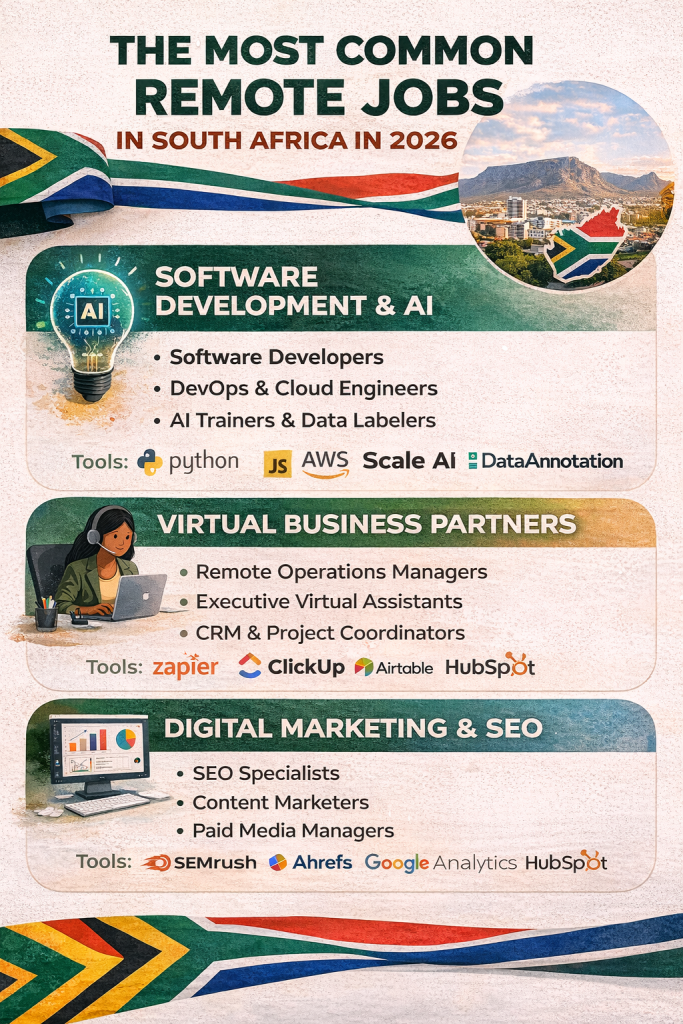
The Most Common Remote Jobs in 2026
The remote job market has matured significantly since the early pandemic years. Employers now prioritize specialized digital skills rather than general administrative abilities.
Software Development and Artificial Intelligence
Technology roles remain the most lucrative and widely available remote opportunities. Companies frequently hire software developers, DevOps engineers, cybersecurity analysts, and cloud engineers to work remotely.
There is also a strong surge in demand for professionals working in artificial intelligence training and machine learning datasets. Platforms such as DataAnnotation and Outlier AI regularly hire remote workers to support AI development through tasks such as data labeling, prompt engineering, and model evaluation.
Developers who work with technologies such as Python, JavaScript, React, AWS, and Google Cloud often secure the highest-paying remote roles.
Virtual Business Partners and Operations Roles
Traditional “Virtual Assistant” roles have evolved significantly. Many companies now recruit Remote Operations Managers or Executive Virtual Assistants who handle complex operational responsibilities.
These professionals manage CRM systems, project coordination, scheduling, client communication, and workflow automation. Tools such as Zapier, ClickUp, Monday.com, and Airtable help automate repetitive processes and streamline operations.
Companies increasingly view these professionals as strategic support partners rather than basic administrative staff.
Digital Marketing and SEO
Digital marketing remains one of the most accessible remote career paths. Businesses across the world rely on specialists to manage their online visibility and customer acquisition.
Roles commonly include SEO specialists, content strategists, paid advertising managers, and social media strategists.
Professionals working in these roles frequently use tools such as HubSpot, SEMrush, Ahrefs, and Google Analytics 4. Demonstrating measurable campaign results often matters more than formal qualifications.
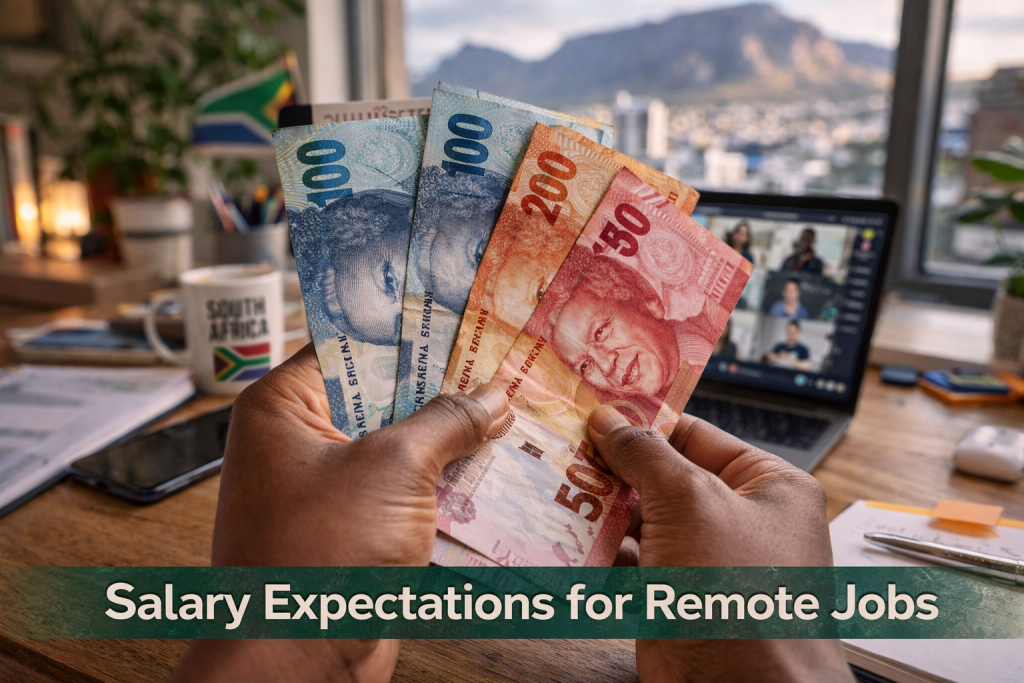
Salary Expectations for Remote Jobs
Salary levels vary depending on experience, skill level, and industry. However, remote roles often exceed local salary benchmarks.
Entry-level remote roles such as virtual assistants or customer support agents typically earn between R15,000 and R35,000 per month depending on experience and employer location.
Mid-level professionals working in marketing, design, or project management often earn between R40,000 and R90,000 per month when employed by international companies.
Highly specialized professionals such as DevOps engineers, cybersecurity specialists, or AI engineers may earn R120,000 or more per month, especially when working for US or European firms.
These figures often reflect independent contractor agreements rather than traditional employment contracts, which means workers usually manage their own benefits and retirement savings.
Where to Find Legitimate Remote Jobs in South Africa
Finding legitimate remote jobs remains one of the biggest challenges for job seekers. Many people encounter scams or unreliable job postings while searching online.
Several platforms consistently publish verified opportunities.
South African job boards such as Pnet, CareerJunction, and Indeed South Africa now include filters for remote and hybrid roles. Listings on these platforms have begun increasing again after a temporary slowdown in 2023 and early 2024.
Professional networking platforms also play a major role. LinkedIn Jobs has become one of the most effective places to discover remote opportunities because many international companies advertise directly through the platform.
Global remote job boards provide additional options. Popular platforms include We Work Remotely, Remote OK, Working Nomads, FlexJobs, and Wellfound (formerly AngelList Talent).
Freelancing platforms such as Upwork, Fiverr, Freelancer, and PeoplePerHour also connect South African professionals with international clients.
When searching for remote roles, job seekers should focus on trusted platforms with transparent recruitment processes.
Virtual Staff South Africa is currently the only site that focuses on just remote-based roles in South Africa. It makes it easy for job seekers looking for remote-work, but also for employers that can now post one post and reach the whole South African job market, instead of one city or region.
Infrastructure Challenges: The Load-Shedding Factor
Remote professionals in South Africa must address local infrastructure challenges to remain competitive globally. The most obvious issue is load-shedding and power instability.
International recruiters are aware of these challenges and often ask candidates how they maintain productivity during outages.
Many professionals now include a “Power Backup and Connectivity” section on their CV. This section typically confirms the use of inverters, UPS systems, or generators.
Stable internet connectivity is equally important. Fiber networks provided by companies such as Vumatel, Openserve, and Frogfoot offer the reliability needed for video conferencing and cloud-based work.
By proactively addressing infrastructure concerns, candidates reassure employers that they can maintain consistent performance.
Legal and Tax Considerations for Remote Workers
Professionals working remotely must understand their legal and tax obligations in South Africa.
South African residents must declare global income to the South African Revenue Service (SARS). This includes payments received from international employers or freelance platforms.
Remote workers may qualify for home office deductions under Section 11(e) of the Income Tax Act if they maintain a workspace used exclusively for work.
Employment contracts also fall under the Basic Conditions of Employment Act (BCEA) when individuals work as employees rather than contractors.
Many remote professionals operate as independent contractors, which changes how labour protections apply. Contractors usually manage their own retirement savings, tax payments, and medical aid.
Because international employment structures vary widely, consulting a qualified tax practitioner is often advisable.
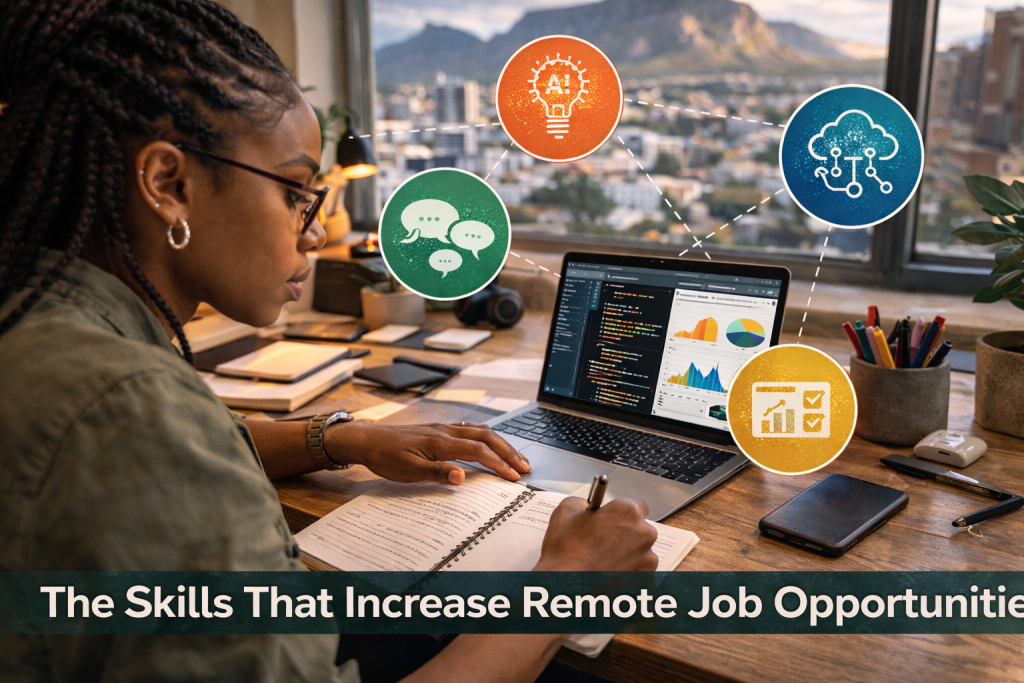
The Skills That Increase Remote Job Opportunities
Competition for remote roles can be intense. Employers often receive applications from candidates across multiple countries.
Professionals who develop specialized digital skills stand out quickly. These skills include AI prompting, automation workflows, CRM management, cloud computing, and data analytics.
Project management skills also create strong opportunities. Professionals who understand platforms such as ClickUp, Asana, Monday.com, and Jira often transition into remote operations or project management roles.
Clear communication remains essential. Remote teams rely heavily on written updates, documentation, and structured collaboration tools.
Building a strong online presence also helps candidates stand out. Many employers evaluate LinkedIn profiles, professional portfolios, and documented project results before scheduling interviews.
In the remote economy, demonstrated skill and real-world results often matter more than formal qualifications.

Frequently Asked Questions
Are remote jobs in South Africa taxable by SARS?
Yes. South African tax residents are taxed on their global income, even if the employer is located overseas. This means payments received from international companies must still be declared to SARS.
Remote workers may qualify for Home Office Deductions under Section 11(e) if they maintain a dedicated workspace used exclusively for work.
For 2026, the tax threshold for individuals under 65 is R99,000, but tax obligations depend on total annual income. Consulting a tax practitioner is recommended when working with foreign employers.
How can I tell if a work-from-home job is a scam?
Legitimate employers never ask candidates to pay upfront fees. Requests for payments related to training materials, laptop insurance, or registration fees are strong warning signs.
Job seekers should also be cautious of offers sent via WhatsApp or Telegram from unknown numbers.
Always verify the company through LinkedIn, Glassdoor, and the company’s official website, and confirm that recruiter email addresses match the company domain.
Can I work for a US or UK company from South Africa?
Yes. Many international companies hire South African professionals because of the country’s time-zone alignment with Europe and strong English communication skills.
UK companies are especially common employers because working hours often align with South African business hours.
US companies may require shifted schedules, such as 4:00 PM to midnight South African Standard Time, to overlap with US Eastern Standard Time.
Most international roles are structured as independent contractor agreements, which means workers manage their own benefits and tax responsibilities.
Which platforms are best for finding verified remote work?
Several platforms consistently publish legitimate remote job opportunities.
Professional networking sites such as LinkedIn Jobs remain one of the most effective sources.
Specialized remote job boards such as We Work Remotely, Remote OK, FlexJobs, Virtual Staff South Africa, and Working Nomads also list verified opportunities.
South African platforms such as Pnet and CareerJunction now include filters for fully remote roles.
Do I need a degree to get a remote job?
A university degree can help in fields such as finance, law, or engineering. However, many digital roles prioritize demonstrated skills rather than formal qualifications.
Employers often value portfolios hosted on platforms such as GitHub, Behance, or personal websites.
In many remote hiring processes, documented results and practical experience outweigh academic credentials.


